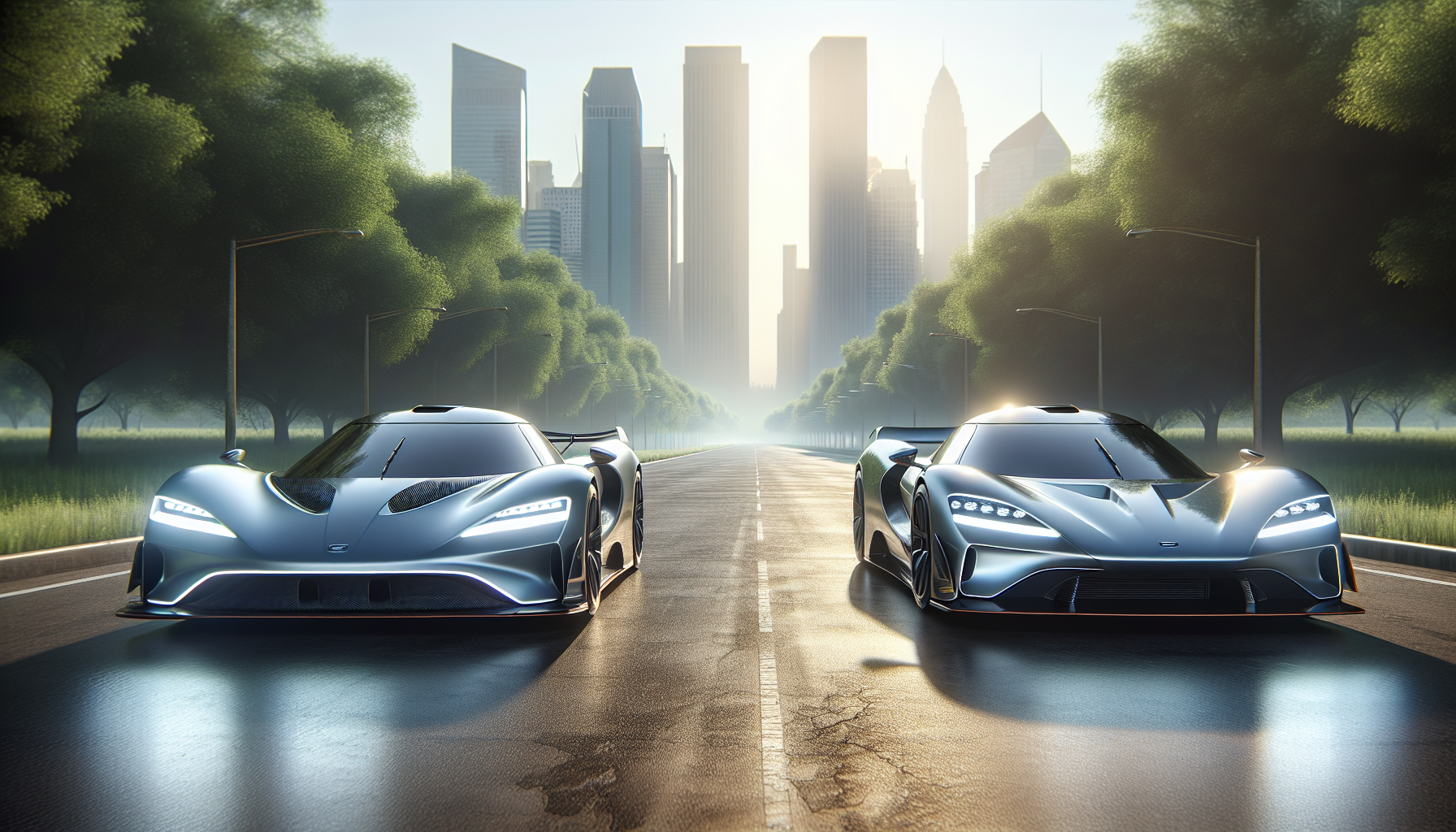
2026 Toyota Supra vs 2026 Nissan Z: Specs, Features, Pros and Cons
Two Japanese sports cars, decades of rivalry, and a question that refuses to stay settled — which one actually deserves your money in 2026? The 2026 Toyota Supra vs 2026 Nissan Z: Specs, Features, Pros and Cons debate isn't new, but the stakes feel higher now than ever. Toyota has rolled out what it's calling the GR Supra Final Edition, a swan song for one of the most polarizing sports cars of the modern era. Nissan, meanwhile, has answered with an evolved Z lineup that includes the track-ready NISMO variant, pushing the old-school roadster formula further than it's gone in years. Both cars carry serious heritage, both have passionate fan bases, and both make a compelling case on paper.
What makes this comparison genuinely interesting is how differently these two cars approach the same problem. The Supra leans into precision engineering, a BMW-derived inline-six, and a chassis tuned to chase lap times with clinical efficiency. The Z is more raw, more traditional in its layout, and — depending on which version you're cross-shopping — more accessible. MotorTrend's 2026 GR Supra review makes a point worth taking seriously: the Supra already stands out as a strong competitor to the Nissan Z, and despite its criticisms, its strengths tend to outweigh its weaknesses in most real-world contexts.
Still, numbers alone don't tell the whole story. Transmission choices, interior feel, driving character, pricing, and long-term ownership costs all factor into a decision that buyers actually have to live with. This breakdown covers specs, features, pros, cons, and a final verdict to help you cut through the noise and pick the right car for how you actually drive.
2026 Toyota GR Supra Final Edition
The 2026 Supra arrives as the Final Edition, and Toyota hasn't been shy about making it a proper send-off. The 3.0-liter turbocharged inline-six — sourced through Toyota's partnership with BMW — produces 382 horsepower and 368 lb-ft of torque. It's a figure that puts the Supra firmly in serious sports car territory, not just the "sporty car" category that often gets confused with it.
One of the biggest stories around this generation of Supra has been the transmission situation. Toyota's own comparison page confirms that the GR Supra comes standard with a 6-speed intelligent Manual Transmission (iMT) or an 8-speed automatic with paddle shifters — a flexibility that matters enormously to driving purists. The Final Edition specifically includes the six-speed manual, and CarBuzz's head-to-head comparison notes that the GR Supra Final Edition being equipped with a manual gearbox is a major differentiator when you put it side by side with the NISMO Z, which is automatic-only.
On the chassis side, the Supra rides on a short 97.2-inch wheelbase and weighs in around 3,181 pounds — relatively light for a car with this much power. The double-joint spring front axle and five-link rear suspension borrow directly from BMW M development programs, and the results on track are predictably sharp. Adaptive suspension is standard, variable sport steering is standard, and Brembo brakes sit at all four corners.
Fuel economy comes in around 19 mpg city and 26 mpg highway with the manual gearbox, though as MotorTrend points out, the smaller 13.7-gallon fuel tank limits total range to about 288 miles — a genuine inconvenience on longer road trips that's easy to overlook until you're stranded.
Inside, the Supra's cabin is compact and driver-focused. The 8.8-inch infotainment screen is borrowed from BMW's parts bin, which means the interface is competent but not exactly cutting-edge. Wireless Apple CarPlay is standard. There's no Android Auto compatibility, which remains a sore point for a meaningful chunk of buyers. The interior quality is good, with available Alcantara trim and carbon fiber accents, but the heavy BMW DNA means some controls feel slightly out of place in a Toyota badge car.
Pricing for the 2026 Final Edition starts around $58,090 for the base trim, with the top-spec variant climbing past $65,000 before options. That's a premium over the standard Z lineup, and Toyota knows it — the Final Edition is positioned as a collector's item as much as a driver's car.
2026 Toyota GR Supra: Pros and Cons
| Pros | Cons |
|---|---|
| 382 hp turbocharged inline-six delivers class-leading straight-line performance | BMW-sourced interior feels mismatched with Toyota branding |
| Six-speed manual available on Final Edition — a major win for purists | Small 13.7-gallon fuel tank limits range to ~288 miles |
| Brembo brakes and adaptive suspension standard across the lineup | No Android Auto compatibility |
| Precise, athletic chassis with BMW M suspension engineering | Limited interior storage; not practical for daily driving |
| Strong collector value as a Final Edition | Higher starting price than the base Nissan Z by a significant margin |
| Well-proven reliability record for the turbocharged drivetrain | Some buyers resent the heavy BMW parts-sharing |
| Wireless Apple CarPlay standard | Rear visibility is poor; blind spot management challenging |
2026 Nissan Z
The 2026 Nissan Z continues to carry the torch for a nameplate that stretches back to 1969, and Nissan hasn't let that heritage gather dust. The standard Z uses a twin-turbocharged 3.0-liter V6 producing 400 horsepower and 350 lb-ft of torque — actually edging out the base Supra in horsepower terms, which is worth a moment's appreciation.
Transmission options on the standard Z include a six-speed manual or a nine-speed automatic. The NISMO variant, however, is automatic-only, a choice that's drawn criticism from the traditional Z faithful. That said, winenfood.com's detailed look at the NISMO makes a fair counter-argument: the NISMO-retuned 9-speed automatic is genuinely impressive in Sport+ mode, with downshifts that are quick and well-timed rather than the lazy, hunting behavior you'd find in lesser sport automatics. If you're going to commit to an auto-only sports car, at least Nissan appears to have taken the gearbox seriously in the NISMO trim.
The NISMO also gets meaningfully upgraded mechanicals across the board. Torque News covers the cooling upgrades extensively — an additional intercooler, upgraded engine oil cooler, an auxiliary heat exchanger, and a larger front grille all suggest Nissan engineered the NISMO with track use genuinely in mind, not just as a visual package.
On the dynamics front, opinions vary. Boucher Nissan's driving comparison argues that the Z's driving feel is more connected and visceral than the Supra's — almost as if the car is tuned to be an extension of the driver rather than a machine executing corner-carving instructions. That's a subjective call, but it tracks with the general consensus that the Z has a rawer, more emotionally engaging character, even if it doesn't match the Supra for outright precision.
The Z's interior is more comfortable with daily driving than the Supra's, with a larger 12.3-inch infotainment screen in NISMO trim, standard Apple CarPlay and Android Auto, and a more spacious feel despite similar overall dimensions. The design is clearly inspired by the original S30 Z, with the broad hood, sloping roofline, and twin-pod instrument cluster all nodding to the classic era while feeling contemporary rather than retro-kitschy.
One of the Z's biggest advantages is pricing. The base 2026 Z Sport starts around $41,015, with the Performance trim sitting around $46,015, and the NISMO climbing to approximately $62,000. That means buyers who don't need the NISMO's track capabilities can get a legitimately fast, manual-equipped sports car for well under $50,000 — a genuine value proposition that the Supra can't match at any comparable trim level.
The anadiorb.com comparison of the Supra Final Edition and Z NISMO notes that the Z NISMO's interior, while improved, still trails the Supra's material quality in certain areas. The plastics quality gap is real, particularly on lower surfaces. But for buyers prioritizing engagement and value over premium feel, the trade-off is entirely defensible.
Fuel economy with the manual gearbox sits around 19 mpg city and 26 mpg highway, essentially matching the Supra, though the Z's 18.2-gallon fuel tank provides meaningfully better range — closer to 473 miles on the highway versus the Supra's 288 miles. Over a year of ownership, that matters.
2026 Nissan Z: Pros and Cons
| Pros | Cons |
|---|---|
| 400 hp twin-turbo V6 technically edges out the base Supra in horsepower | NISMO trim is automatic-only, frustrating purist buyers |
| Six-speed manual available on base and Performance trims | Interior materials quality trails the Supra, particularly on lower trim levels |
| Larger 18.2-gallon fuel tank means far better range on long drives | Heavier than the Supra at approximately 3,572 lbs (NISMO) |
| More accessible pricing; base Z Sport starts around $41,015 | Older platform compared to the Supra's BMW-co-developed chassis |
| Android Auto and Apple CarPlay both standard | Infotainment UI can feel cluttered at higher screen brightness |
| NISMO cooling upgrades make it genuinely track-capable | NISMO pricing approaches Supra Final Edition territory, reducing value advantage |
| Stronger emotional, visceral driving character for many enthusiasts | Ride quality is firmer than some buyers expect for daily use |
| Larger infotainment screen (12.3-inch on NISMO) | Resale value historically trails European-origin sports cars |
Head-to-Head Specs Comparison
Before landing on a verdict, here's how the key figures stack up side by side:
| Spec | 2026 Toyota GR Supra Final Edition | 2026 Nissan Z NISMO |
|---|---|---|
| Engine | 3.0L Turbocharged I6 | 3.0L Twin-Turbo V6 |
| Horsepower | 382 hp | 420 hp |
| Torque | 368 lb-ft | 384 lb-ft |
| Transmission | 6-speed manual / 8-speed auto | 9-speed auto (NISMO only) |
| 0-60 mph | ~3.9 seconds | ~4.1 seconds (estimated) |
| Fuel Economy (City/Hwy) | 19/26 mpg | 18/25 mpg |
| Fuel Tank | 13.7 gallons | 18.2 gallons |
| Curb Weight | ~3,181 lbs | ~3,572 lbs |
| Starting MSRP | ~$58,090 | ~$62,000 (NISMO) |
| Infotainment Screen | 8.8-inch | 12.3-inch |
| Android Auto | No | Yes |
Verdict: Which Car Wins in 2026?
Comparing the 2026 Toyota Supra vs 2026 Nissan Z across specs, features, pros and cons, the honest answer is that neither car is universally better — but for most buyers, the 2026 Nissan Z is the stronger overall choice, and here's why.
The Z's value proposition is genuinely hard to argue against. At base and Performance trim levels, you're getting 400 horsepower, a six-speed manual, a large fuel tank, Android Auto, and a driving experience that plenty of experienced automotive journalists describe as more emotionally engaging than the Supra's polished but somewhat clinical approach. The Car Connection's direct comparison reflects how closely matched these cars are in objective performance, but the Z delivers that performance at a lower entry point.
Where the Supra earns its premium is in chassis precision, build quality, and the genuine uniqueness of the Final Edition with its BMW M-derived engineering. If you have the budget, want a collector piece, or prioritize outright handling sharpness over raw emotional connection, the Supra Final Edition is worth every dollar of its premium. The manual gearbox availability on the Supra Final Edition — while the NISMO Z abandons it — also matters deeply if three pedals are non-negotiable for you.
But if you want a sports car you can actually live with daily, drive without fuel range anxiety, and connect with emotionally rather than just admire technically, the Z makes a more compelling case for a broader audience. The NISMO is a serious machine with genuine track credentials, and the standard Performance trim with the manual might be the actual sweet spot of this entire segment.
The Supra is the better engineered car in a narrow technical sense. The Z is the better sports car for most people most of the time. That's why the Z edges out the winner's spot here — but only just.
FAQ: Frequently Asked Questions
Does the 2026 Nissan Z come with a manual transmission?
Yes, but with an important caveat. The standard 2026 Nissan Z Sport and Performance trims are available with a six-speed manual gearbox. The NISMO variant, however, is exclusive to the nine-speed automatic transmission. As CarBuzz's comparison notes, this is a notable point of contention for enthusiast buyers who specifically want the NISMO's performance upgrades paired with a manual.
Is the 2026 Toyota Supra still using BMW parts?
Yes. The GR Supra continues to share its platform, inline-six engine architecture, and significant portions of its interior switchgear with BMW — specifically the Z4 roadster. The 8.8-inch infotainment system and various control interfaces trace directly back to BMW's parts bin. Traction Life's comparison review covers how this influences both the driving character and the interior experience. For many buyers, this is irrelevant since the results speak for themselves on track. For brand purists, it remains a sticking point.
Which car has better fuel range — the Supra or the Z?
The Nissan Z has a clear advantage here. With its 18.2-gallon fuel tank, the Z can theoretically travel close to 473 miles on a highway tank. The Supra's 13.7-gallon tank limits highway range to around 288 miles at 26 mpg, as MotorTrend highlights in their Z review. If you plan to use either car for road trips or long weekend drives, the Z's extra range is a real quality-of-life advantage.
How does the 2026 Supra vs 2026 Z compare on pricing?
The Nissan Z starts around $41,015 for the base Sport trim, making it substantially more accessible than the 2026 Supra Final Edition, which begins around $58,090. The NISMO variant narrows the gap significantly — climbing to approximately $62,000 — but the standard Z lineup remains the more affordable entry into Japanese sports car performance. For buyers cross-shopping the 2026 Toyota Supra vs 2026 Nissan Z across all specs, features, pros and cons, the Z's lower base price is one of its most decisive advantages.
Which car is better for track driving?
Both cars are capable on track, but they approach it differently. The Supra's BMW-derived suspension and lower weight give it a precision edge in timed lap contexts. The Z NISMO, however, gets serious cooling upgrades — an additional intercooler, upgraded oil cooler, auxiliary heat exchanger, and a larger front grille — making it genuinely engineered for sustained track use rather than just occasional spirited driving. Which car is "better" on track depends heavily on the circuit, the driver, and whether you prioritize absolute lap time or raw engagement.