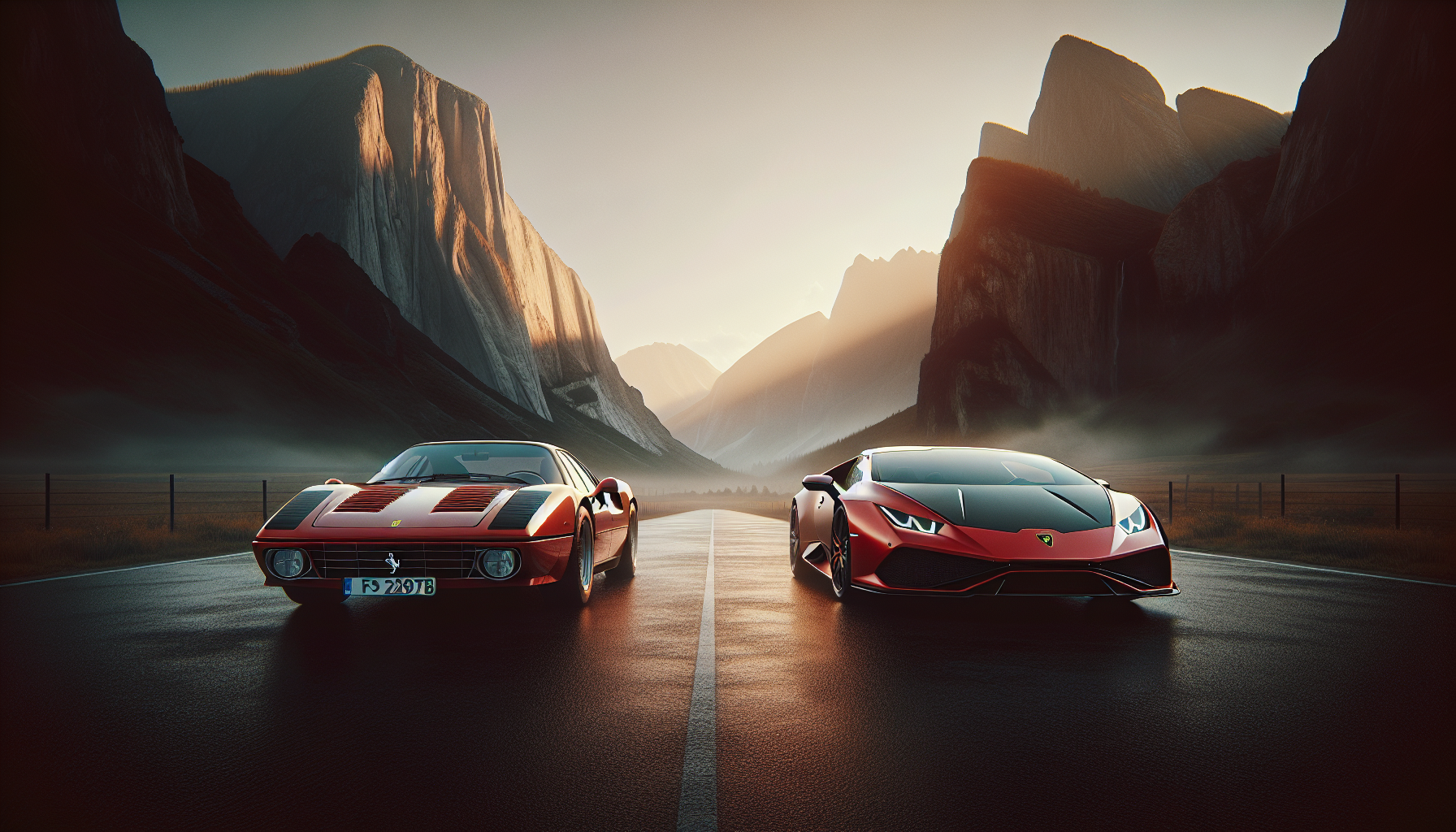
Ferrari 296 GTB vs Lamborghini Huracan Tecnica: Italian Supercar Showdown
There's a particular kind of madness that comes with spending over $300,000 on a car, and yet both Ferrari and Lamborghini have somehow convinced buyers that it's not just reasonable but necessary. The Ferrari 296 GTB vs Lamborghini Huracan Tecnica: Italian Supercar Showdown is more than a spec-sheet argument — it's a philosophical debate about what a modern supercar should be. One camp believes the future belongs to electrified powertrains and surgical precision; the other insists that a naturally aspirated V10 screaming to 8,500 rpm is a religious experience that no battery pack can replicate.
Both cars come from Maranello and Sant'Agata Bolognese respectively, two small Italian towns that have spent decades manufacturing some of the most emotionally charged automobiles on earth. The 296 GTB, introduced in 2021, represents Ferrari's bold step into plug-in hybrid territory for its mid-engine berlinetta lineup — pairing a twin-turbocharged 3.0-liter V6 with an electric motor for a combined 819 horsepower. The Huracan Tecnica, launched in 2022, takes Lamborghini's naturally aspirated 5.2-liter V10 and refines it into what the company calls the ultimate driver's Huracan — rear-wheel drive, aerodynamically reworked, and entirely uninterested in compromise. Choosing between them is genuinely difficult, but we're going to try anyway.
This comparison will break down performance, driving character, everyday usability, technology, and value to give you a clear picture of where each car excels and where it falls short. Whether you're a prospective buyer, an enthusiast doing research, or simply someone who enjoys reading about Italian thoroughbreds, the Ferrari 296 GTB vs Lamborghini Huracan Tecnica: Italian Supercar Showdown delivers exactly the kind of obsessive detail this subject deserves.
Ferrari 296 GTB
When Ferrari unveiled the 296 GTB, it faced an immediate credibility challenge. Replacing the F8 Tributo — itself descended from the legendary 458 — with a turbocharged V6 hybrid felt like a step backward to many traditionalists. Ferrari's engineers had a different perspective. The "296" designation refers to the total displacement (2,996cc) and cylinder count (6), while "GTB" stands for Gran Turismo Berlinetta, a naming convention stretching back to the 250 GT era. The result is a car that benchmarks differently from anything that came before it.
The powertrain is the headline act. The twin-turbo V6 produces 654 hp on its own, but paired with a 167 hp electric motor integrated into the rear-mounted 8-speed dual-clutch gearbox, the combined output reaches 819 hp and 546 lb-ft of torque. Ferrari claims a 0–62 mph time of 2.9 seconds and a top speed exceeding 205 mph. What makes this more than a numbers exercise is how Ferrari has engineered the power delivery — the electric motor fills turbo lag so seamlessly that the engine feels naturally aspirated at low revs, then builds into something genuinely ferocious as the turbos spool. The V6 also revs to 8,500 rpm, which is extraordinary for a forced-induction engine and goes some way toward satisfying the crowd that mourns the old V8.
Chassis dynamics are where the 296 GTB becomes truly special. Ferrari fitted the car with third-generation Side Slip Control, active suspension, and — optionally — Ferrari Dynamic Enhancer Plus, which allows drivers to use rear brake pressure to adjust yaw angle mid-corner. The result is a mid-engine car that feels far more adjustable and playful than its predecessor despite being considerably more powerful. The carbon-fiber body keeps the kerb weight to approximately 1,470 kg (dry), which is remarkable given the battery and hybrid componentry on board. The standard car comes without the Assetto Fiorano package, but that optional track-focused setup adds carbon ceramic brakes, a titanium exhaust, and Michelin Pilot Sport Cup 2 tires.
| Pros | Cons |
|---|---|
| 819 hp combined output — extraordinary performance | Higher starting price (~$322,986 before options) |
| Hybrid system eliminates turbo lag effectively | V6 soundtrack lacks emotional depth versus a V10 or V12 |
| Exceptional chassis balance and driver adjustability | Heavier than Huracan Tecnica due to battery system |
| Wide range of drive modes including EV-only operation | PHEV complexity may concern long-term reliability skeptics |
| Outstanding braking performance | Rear visibility is notably poor |
| Can operate on electric power alone (limited range) | Options list inflates real-world cost dramatically |
| Stunning, futuristic exterior design | Some buyers feel the V6 is philosophically wrong for a Ferrari |
Lamborghini Huracan Tecnica
The Huracan Tecnica occupies a specific and clever position in Lamborghini's lineup. It sits between the everyday (relatively speaking) Huracan EVO and the full-on Huracan STO track weapon, offering rear-wheel drive and STO-derived aerodynamics in a package that's actually comfortable enough to use on public roads. Lamborghini tuned the Tecnica specifically to be the most satisfying version of the Huracan for real-world driving, which involved not just retuning suspension and steering but reworking the aerodynamics to generate meaningful downforce without turning the car into a track-day specialist.
The engine is the centerpiece. Lamborghini's 5.2-liter naturally aspirated V10 produces 640 hp and 417 lb-ft of torque in the Tecnica — the same state of tune as the Huracan STO. Drive goes entirely to the rear wheels through a seven-speed dual-clutch gearbox. The numbers on paper seem slightly modest compared to the 296 GTB: 0–62 mph in 3.2 seconds, top speed of 202 mph. But figures don't capture what this engine does to the senses. The V10 revs to 8,500 rpm, and approaching that limiter produces an operatic, metallic shriek that has inspired thousands of YouTube videos and more than a few tears from grown adults. It is, without exaggeration, one of the finest sounds in the automotive world.
The chassis changes for the Tecnica are meaningful. Lamborghini installed a revised rear-wheel steering system, optimized the suspension geometry, and recalibrated the LDVI (Lamborghini Dinamica Veicolo Integrata) system — the central brain that coordinates traction control, stability control, and torque vectoring. The aerodynamic package borrows the STO's rear wing and front splitter design to produce a claimed 35% more downforce than the standard Huracan EVO. The result is a car that stays planted through fast corners while also being playful and slide-friendly when you want it to be. At 1,379 kg dry, it's meaningfully lighter than the 296 GTB, and that shows up immediately when you push the car on a twisting road.
| Pros | Cons |
|---|---|
| Naturally aspirated V10 — one of the greatest engine sounds ever made | Lower combined power output (640 hp vs 819 hp) |
| Lighter weight (1,379 kg dry) improves agility and feel | No hybrid system means no EV mode or fuel efficiency benefit |
| Rear-wheel drive setup rewards skilled drivers | Seven-speed DCT can feel abrupt at low speeds |
| STO-derived aerodynamics at a fraction of the STO price | Interior technology feels dated versus the 296 GTB |
| Lower starting price (~$237,321) | Fuel economy is genuinely poor — around 14 mpg combined |
| More communicative steering feedback | Less powerful braking package than Ferrari (standard) |
| Simpler powertrain — no battery or hybrid complexity | Turning circle is surprisingly large for a sports car |
Head-to-Head: Key Performance Categories
Power and Acceleration
The 296 GTB has a decisive advantage in raw output — 819 hp versus 640 hp. In straight-line performance, the Ferrari edges ahead, with the hybrid system providing instant torque that conventional combustion engines simply cannot match off the line. However, both cars feel spectacularly fast in the real world, and the Huracan Tecnica's 3.2-second 0–62 time is not something that will feel slow to any living human being.
Driving Engagement
This is where opinions diverge sharply. The Huracan Tecnica's rear-wheel-drive setup, lighter weight, and naturally aspirated engine create a more visceral, analog experience. The steering communicates more, the rear slides more predictably, and the entire car feels like it's asking you to be involved. The 296 GTB is arguably the more technically accomplished driver's car — Ferrari's chassis engineering is extraordinary — but it also buffers the experience slightly through its electronics and hybrid system. Both are hugely rewarding, but the Lamborghini feels rawer.
Technology
Ferrari wins this category without much debate. The 296 GTB's hybrid powertrain, the Ferrari Dynamic Enhancer, the active suspension system, and the digital HMI interface are all more sophisticated than what Lamborghini offers. The Huracan's cabin technology — while functional — is a generation behind, and the infotainment system in particular feels older than the car deserves.
Sound
Lamborghini. No contest. The Huracan Tecnica's V10 approaching redline is a generational automotive experience. The 296 GTB sounds good for a turbocharged V6 — it's characterful and mechanical — but it doesn't produce the same primal response. This isn't a criticism of Ferrari's engineering; it's simply an acknowledgment that replacing a V8 with a smaller forced-induction unit involves an emotional trade-off.
Value
The Huracan Tecnica starts at roughly $237,321 in the US market, while the 296 GTB begins at approximately $322,986. Given the significant price gap, the Lamborghini represents considerably better value if outright performance isn't the primary criterion. However, the Ferrari's hybrid system, performance advantage, and potentially stronger residuals complicate the calculation.
Usability
The 296 GTB offers genuine EV-only operation for short distances, which adds a degree of everyday flexibility. It's marginally quieter in traffic, and the hybrid system improves urban fuel efficiency. The Huracan Tecnica, burning premium fuel at a rate that makes accountants nervous, offers no such concessions. Both cars are genuinely road-usable mid-engine sports cars — neither is particularly good at parking — but the Ferrari has a slight edge here.
Verdict
The Ferrari 296 GTB is the winner of this Italian supercar showdown, but the margin is narrower than the performance and technology gap might suggest.
Here's why: the 296 GTB represents a more complete, more forward-looking performance car. Its 819 hp hybrid powertrain is a remarkable piece of engineering that delivers unprecedented performance while still functioning as a usable road car. The chassis is extraordinarily capable, the braking performance is class-leading, and Ferrari's commitment to producing an engaging, adjustable car despite the complexity of the hybrid system is genuinely impressive. If you're choosing between these two cars primarily on which is the better machine — the more capable, the more technologically advanced, the faster — the Ferrari wins.
But let's be honest about what you're giving up. The Huracan Tecnica's V10 engine is an irreplaceable sensory experience that the 296 GTB cannot fully match. Every time you put your foot down and that flat-plane V10 builds toward 8,500 rpm, filling the cabin with a sound that can only be described as mechanical thunder, you understand why Lamborghini has kept this engine alive for over a decade. There's also something to be said for the Tecnica's lighter weight and more communicative chassis — it's the kind of car that makes a very good driver feel excellent, while the Ferrari can occasionally make you feel more like a passenger in a highly automated process.
For buyers who want the absolute pinnacle of Italian supercar engineering, the finest performance, the most sophisticated technology, and a car that points toward where the segment is going, the 296 GTB is the choice. For buyers who want the most emotionally pure Italian supercar experience — the sound, the fury, the sense that you're connected to something raw and alive — the Huracan Tecnica is the one. The Ferrari 296 GTB vs Lamborghini Huracan Tecnica: Italian Supercar Showdown doesn't produce a loser so much as it produces two cars that appeal to fundamentally different emotional needs. If you have the budget and you're forced to choose, choose the Ferrari. But keep the Lamborghini in your memories, because nothing this good lasts forever.
FAQ (Frequently Asked Questions)
H3: Which is faster, the Ferrari 296 GTB or the Lamborghini Huracan Tecnica?
The Ferrari 296 GTB is faster in most measurable categories. With 819 hp from its combined petrol-electric hybrid powertrain, Ferrari claims a 0–62 mph time of 2.9 seconds versus the Huracan Tecnica's 3.2 seconds. The Ferrari also has a marginally higher top speed — over 205 mph versus 202 mph for the Lamborghini. The power advantage is significant: 179 hp separates the two cars, which shows up in real-world driving particularly during mid-range acceleration on the road or track. That said, the Huracan Tecnica's lighter weight (1,379 kg vs approximately 1,470 kg dry for the Ferrari) keeps the gap from being enormous, and the Lamborghini's lap times on certain circuits can challenge the Ferrari depending on track layout.
H3: Is the Ferrari 296 GTB worth the higher price over the Huracan Tecnica?
Whether the Ferrari justifies its roughly $85,000 premium depends entirely on priorities. The 296 GTB offers more power, more sophisticated technology, a PHEV system with short-range EV capability, and arguably stronger long-term residual values given its limited production volumes and hybrid innovation. If those factors matter to you — and for track performance enthusiasts they likely will — the premium is defensible. However, if your priority is driving feel, the V10 soundtrack, lighter weight, and a more analog supercar experience, the Huracan Tecnica at around $237,321 is a remarkable value. Many experienced supercar drivers would argue the Lamborghini delivers 95% of the emotional satisfaction at roughly 73% of the price.
H3: How practical is the Ferrari 296 GTB as a daily driver compared to the Huracan Tecnica?
Neither car is practical in any conventional sense, but the 296 GTB has marginal advantages. Its hybrid system allows for silent, electric-only operation at low speeds in traffic, and its combined fuel economy is slightly better than the Huracan Tecnica's thirsty V10. Both cars have small luggage areas, noisy cabins at motorway speeds relative to grand tourers, and suspension that can be firm in comfort mode. The Ferrari's ride is arguably better controlled through its active suspension, but the Huracan Tecnica is no harsher than comparable sports cars. If daily driving is genuinely important, neither car is wrong, but the Ferrari's hybrid flexibility gives it a small practical advantage.
H3: Will Lamborghini replace the Huracan V10 with a hybrid or electric powertrain?
Yes — Lamborghini has confirmed that the successor to the Huracan will use a hybrid powertrain, ending the naturally aspirated V10's tenure in the brand's entry-level supercar slot. The Huracan Tecnica therefore represents one of the final expressions of this extraordinary engine in production form. Lamborghini's higher-end Revuelto has already made the transition to a V12 hybrid, and the entire brand is committed to electrification across its lineup as part of its Direzione Cor Tauri sustainability strategy. This makes the Huracan Tecnica a particularly significant car historically — a last hurrah for pure, unassisted V10 power in a Lamborghini road car.
H3: Which car is better for track use — the 296 GTB or the Huracan Tecnica?
For track driving, the Ferrari 296 GTB has the edge in outright performance capability, particularly with the optional Assetto Fiorano package that includes carbon ceramic brakes, Michelin Pilot Sport Cup 2 tires, and titanium exhaust. The combination of greater power, Ferrari's advanced Side Slip Control system, and Ferrari Dynamic Enhancer Plus allows highly skilled drivers to extract exceptional lap times. However, the Huracan Tecnica with its STO-derived aerodynamics, rear-wheel drive, and lighter weight is also a formidable track tool and is arguably more accessible — its more communicative chassis gives less experienced track drivers better feedback. Lamborghini even offers the Huracan STO for buyers who want to go further down that road. For pure lap times, Ferrari; for engagement and driver development, the Lamborghini has a strong argument.