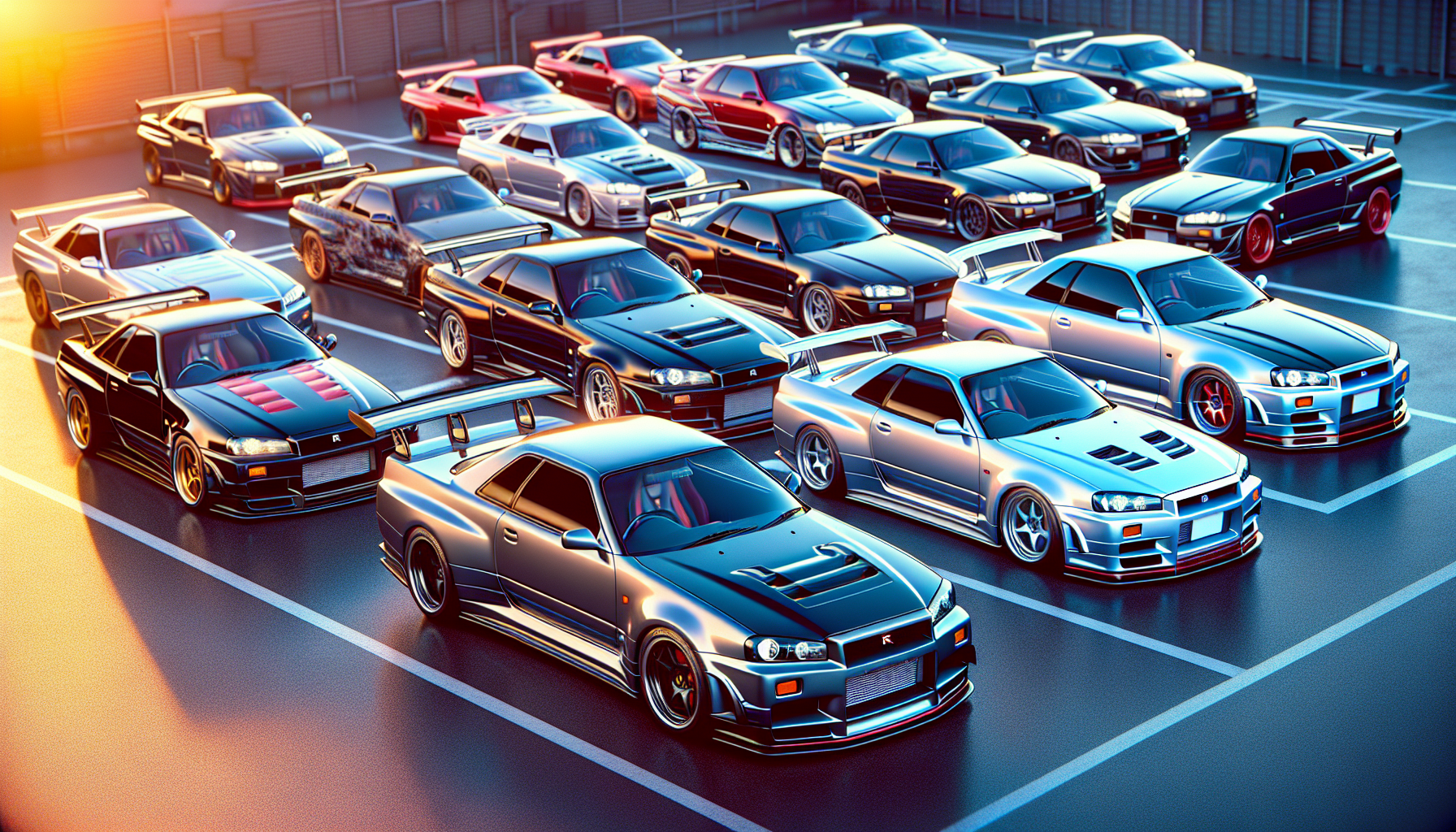
JDM Sports cars for sale in Japan - JDM EXPO - Best exporter of JDM skyline GTR to USA, Europe, Canada, Australia and more!
The global appetite for Japanese sports cars has never been stronger. From garage-kept Nissan Skyline GT-Rs to bone-stock Honda NSXs and turbocharged Toyota Supras, collectors and enthusiasts across four continents are chasing the same inventory — and the competition is getting fierce. What was once a niche import hobby has matured into a serious collector car market, with certain models appreciating faster than equivalent European exotics.
Understanding where to source these vehicles, how the export process works, and which models represent the best value right now requires more than a passing familiarity with auction sheets and compliance paperwork. It requires a trusted partner on the ground in Japan — one with the inventory depth, documentation history, and international logistics expertise to deliver a car that actually matches its listing. That's a standard very few exporters meet consistently. JDM EXPO, operating out of Nagoya and the greater Aichi region, has built its reputation by meeting exactly that standard.
This analysis examines the current landscape of Japanese sports cars available for export, what drives pricing and demand for specific models, how the import compliance landscape differs across target markets, and why choosing the right exporter makes or breaks the experience. Whether you're in the United States waiting out a 25-year rule, in Europe where older JDM cars import freely, or in Australia navigating its own specialist vehicle pathway, this guide covers the data that matters.
The JDM Sports Car Market: Inventory Depth and Model Availability
When collectors talk about the golden era of Japanese performance engineering, they're generally referencing a window that runs from the late 1960s through the early 2000s. This period produced an extraordinary concentration of driver-focused machines — cars designed around mechanical feedback, driver engagement, and in many cases, homologation requirements from Group A and Group N rally regulations.
The breadth of what's actually available through specialist exporters is wider than most buyers realize. JDM Sports cars for sale in Japan - JDM EXPO lists inventory spanning the Nissan Skyline GTR R32, R33, and R34, along with the modern R35 GT-R, the Silvia S15, Toyota Supra RZ, Honda NSX, and Mitsubishi Evolution series — which represent arguably the most concentrated lineup of Japanese sports cars available from a single source anywhere in the export market.
Beyond the headline models, the classic and sports inventory at JDM EXPO extends into genuinely rare territory: RX3 Savanna, Cosmo Sport, Fairlady Z 432, Impreza STi 22B, Honda NSX Type R, Hakosuka, Kenmeri, FD RX-7 Spirit R Type A, Supra RZ, and the Toyota 2000GT. These are not commodity cars. Several are museum-grade pieces that rarely surface publicly in Japan, let alone internationally.
The 2000GT, for instance, is one of the most historically significant Japanese sports cars ever built. Toyota produced approximately 351 units between 1967 and 1970 in collaboration with Yamaha, making genuine examples extraordinarily scarce. The Fairlady Z S30 432 — named for its 4-cam, 3-carburettor, 2-valve configuration derived from the Prince Skyline — is similarly rare. When these cars appear in export inventory, buyers need to move quickly and confidently. Having an established relationship with an exporter who has already vetted the car's paperwork and condition is worth considerably more than any price negotiation.
What separates professional exporters from casual dealers in this space is the ability to locate and source cars that aren't sitting on a public lot. JDM EXPO's services page confirms this directly — if a buyer is searching for a unique or rare sports or classic car not currently in stock, their team will actively locate it. This kind of search service, backed by deep auction access and a network of private vendors across Japan, is what distinguishes a true specialist from a simple reseller.
Nissan Skyline GT-R: The Anchor of the JDM Export Market
No single model has done more to define the international perception of Japanese sports cars than the Nissan Skyline GT-R. Across three key generations — the R32 (1989–1994), R33 (1993–1998), and R34 (1999–2002) — Nissan produced a car that dominated motorsport, terrorized Porsche and BMW at Nürburgring, and captured the cultural imagination of an entire generation raised on Gran Turismo.
The R32 GT-R was the first to reach 25-year import eligibility in the United States, which it did in 2014, and the subsequent years saw a rapid increase in prices as American buyers could finally legally acquire them. The R33 followed, and the R34 — still the most desired variant for most collectors — began entering U.S. legal eligibility territory from 2024 onward. In markets like the UK, Australia, Canada, and much of Europe, where the 25-year rule either doesn't apply or applies differently, all three generations have been importable for years.
Price movements across all three generations have been sharp. R34 GT-R V-Spec II examples in premium condition were trading well above $100,000 USD even before R34 eligibility fully arrived stateside, with certain M-Spec Nür examples commanding multiples of that figure. The R32 V-Spec II, once considered the bargain entry point into GT-R ownership, has seen its floor price climb steadily as supply contracts and demand broadens globally.
JDM EXPO's paginated sports car listings reflect this reality in the variety of condition grades and specification levels offered. Buyers who understand the difference between a standard GT-R and a V-Spec, between an N1 specification car and a regular production example, and between factory BNR34 and aftermarket-modified examples, are the buyers who get the most value out of this market. Understanding auction grades, chassis stamps, and Japanese shaken documentation is non-negotiable — and the best exporters translate all of this for international clients.
Import Compliance: How Regulations Shape the Buying Experience
The regulatory landscape for importing Japanese sports cars varies meaningfully by destination country, and navigating it correctly is as important as finding the right car. Mistakes in compliance documentation can result in vehicles being held at customs, fined, or refused entry entirely.
United States: The Federal Motor Vehicle Safety Standards (FMVSS) and EPA regulations present the most complex compliance environment for JDM imports. The primary legal pathway for private importers is the 25-year exemption under the Motor Vehicle Safety Compliance Act, which allows vehicles over 25 years old to be imported without meeting contemporary FMVSS standards. This is the reason U.S. buyers track model year calendars so closely — each passing year unlocks additional variants of the Skyline GTR, Silvia, Supra, and NSX for legal import. Since 2015, JDM EXPO has been delivering Nissan Skyline, Hakosuka GC10, GTR R32, Honda NSX, Mazda RX-7, Toyota Soarer, and many other JDM vehicles directly to the USA, demonstrating both the early commitment to this market and the breadth of models handled.
Australia: The Australian market uses the Specialist and Enthusiast Vehicle (SEV) scheme and the Register of Specialist and Enthusiast Vehicles (RAWS) for non-standard imports. While this pathway exists, it involves significant compliance costs and the use of a RAWS-approved workshop. The Left-Hand Drive restriction further limits some options, though Japan's right-hand drive heritage aligns well with Australian road standards.
Canada: Canada's Motor Vehicle Safety Act allows vehicles 15 years or older to be imported, which means the R34 GT-R became legally importable from 2014 — a decade earlier than in the U.S. This regulatory difference has made Canada one of the most active markets for premium JDM sports cars, and many examples sourced for Canadian buyers have since appreciated substantially.
Europe: European Union regulations and individual national rules vary, but most European countries allow the import of older JDM vehicles under historic vehicle classifications or individual type approval. The UK, post-Brexit, maintains its own Individual Vehicle Approval (IVA) process, though many JDM cars can also enter under the historic vehicle provisions depending on age.
Understanding these pathways upfront — and working with an exporter who has already handled dozens or hundreds of similar transactions in your target market — reduces both risk and delay significantly.
Why Scale and Legitimacy Matter: JDM EXPO's Operational Footprint
The JDM import market has had its share of fraudulent operators over the years. Buyers have been stung by misrepresented auction grades, undisclosed accident history, incorrect chassis identification, and in some cases, vehicles that simply never arrived. This history has made buyers rightfully skeptical — and it's placed a premium on transparency and verifiable credibility.
JDM EXPO's legitimacy documentation addresses this directly. The operation maintains six storage lots in Nagoya and the greater Aichi area, collectively housing one of the largest stocks of JDM sports and classic cars held by any single exporter in Japan. Nagoya's geographic positioning — between Tokyo and Osaka, with excellent access to major Japanese auction houses including USS Nagoya, one of the country's largest — gives the operation a structural advantage in sourcing.
The ability to physically inspect a car before purchase, maintain it in secure storage prior to shipping, and provide verifiable documentation from Japanese auction houses is not universal in this industry. Many smaller operators function purely as brokers, with no physical inventory and no direct relationship with the cars they're selling. The distinction matters enormously when a buyer is committing $50,000 to $200,000+ on a vehicle from the other side of the world.
Physical scale also enables service breadth. Pre-export inspections, mechanical preparation, sourcing of replacement or maintenance parts, and logistical coordination with international shipping lines all become easier when conducted from a large, well-staffed operation with direct relationships across Japan's automotive ecosystem.
The extended inventory listings across multiple pages reflect the volume of turnover and the depth of stock maintained — not a handful of cars curated for presentation, but a genuine working inventory refreshed continuously through auction activity and private sourcing.
Beyond the GT-R: Underappreciated Japanese Sports Cars Worth Watching
While the Skyline GT-R commands the most headlines, experienced collectors increasingly look beyond the obvious icons to find value in Japanese sports cars that are currently under-priced relative to their mechanical and historical significance.
The Honda NSX — particularly the Type R variant — is one of the most technically accomplished cars Japan ever produced. Developed with direct input from Ayrton Senna, the NSX used an all-aluminium monocoque (a first for a production sports car), Honda's VTEC technology refined to a precise edge, and mid-engine dynamics that genuinely rivaled Ferrari's 348. Values have risen consistently, and Type R examples with low mileage and clean histories are now commanding prices that reflect their proper standing in the sports car hierarchy.
The Mazda FD RX-7 Spirit R deserves special mention. Produced only in 2002 as the final expression of the FD series, the Spirit R Type A was a limited-production send-off that featured Bilstein dampers, Brembo brakes, and a retuned twin-turbo 13B rotary producing around 280 PS. Finding a genuine, unmodified Spirit R Type A in documented condition is genuinely difficult — the rotary modification community is passionate, and unmolested cars are increasingly rare.
The Mitsubishi Lancer Evolution series — particularly the Evolution VI Tommi Mäkinen Edition and the Evolution IX — represents perhaps the last generation of proper homologation specials from an era when rally regulations still shaped road car development. These are cars with genuine World Rally Championship DNA, and prices have responded accordingly.
The Toyota Supra RZ (A80 generation) has seen its own price surge driven substantially by popular culture, though genuine twin-turbo manual examples in Japanese domestic market specification remain meaningfully different in specification and condition from the grey market cars that circulated in export markets during the 1990s. Sourcing a proper JDM-spec example matters.
Across all these models, working with an exporter who carries actual inventory — including the sports and classic models found across JDM EXPO's listings — rather than simply bidding to order at auction provides buyers with more information, more time to make decisions, and better insight into condition before committing.
Key Takeaways
- Japanese sports cars are appreciating assets — multiple models including the Skyline GT-R R34, Honda NSX Type R, and Mazda FD RX-7 Spirit R have seen sustained price increases over the past decade with no near-term reversal in sight.
- Import eligibility differs by market — U.S. buyers face a 25-year rule, Canadian buyers benefit from a 15-year threshold, and European and Australian buyers have their own distinct compliance pathways.
- Inventory depth is a meaningful differentiator — exporters like JDM EXPO who maintain physical stock across multiple lots offer better condition visibility, faster transaction timelines, and lower purchase risk than broker-only operations.
- Rare models require proactive sourcing — cars like the Fairlady Z 432, Toyota 2000GT, Impreza STi 22B, and NSX Type R rarely sit unsold for long; working with an exporter who offers active search services is valuable for serious collectors.
- The R34 GT-R U.S. eligibility window is now open — buyers who have been waiting for legal R34 import have the opportunity to act now before domestic U.S. demand fully saturates the available supply.
- Documentation and auction grades are non-negotiable — understanding Japanese auction inspection reports and working with an exporter who provides full documentation protects buyers from misrepresented vehicles.
- JDM EXPO operates the largest physical JDM sports and classic car stock in Japan, with six lots in the Nagoya and Aichi region and a track record of international delivery across the USA, Europe, Canada, and Australia since at least 2015.
FAQ (Frequently Asked Questions)
What Japanese sports cars can I legally import to the USA right now?
Under the 25-year exemption provision of U.S. federal import regulations, any vehicle manufactured 25 or more years ago qualifies for import without meeting contemporary FMVSS and EPA standards. This currently includes the Nissan Skyline GT-R R32, R33, and early R34 production years, as well as Honda NSX models from the early 1990s, Toyota Supra A80 models from 1993 onward, Mazda RX-7 FD models from 1993, and various Mitsubishi Evolution variants. JDM EXPO has been shipping directly to the USA since 2015 and handles the full range of eligibility-compliant models.
How do I know if a JDM car's condition matches its listed description?
The Japanese domestic auction system assigns inspection grades based on exterior condition (body panel assessment), interior condition, and mechanical assessment. Grades run from 1 through 5 (with S for special/excellent examples), and sub-grades like A and B indicate interior quality. Reputable exporters provide the original auction inspection sheet with the vehicle. JDM EXPO's legitimacy information explains their verification and storage process, which allows pre-purchase inspection of physical inventory.
Can JDM EXPO source a specific model that isn't currently in stock?
Yes. According to JDM EXPO's services information, the team actively searches for unique or rare sports and classic cars not currently available in their listed inventory. This is particularly relevant for buyers pursuing low-production variants like the Impreza STi 22B, FD RX-7 Spirit R Type A, or NSX Type R, where available supply is limited and a dedicated search is often necessary.
Which generation of Nissan Skyline GT-R is the best value right now?
This depends heavily on your market and intended use. In the United States, the R32 GT-R V-Spec II remains the most accessible entry point now that 25-year compliance is well established, though prices have climbed significantly. The R33 GT-R offers more refinement and arguably superior chassis balance, and is often priced below equivalent R32 V-Spec examples despite its technical merits. The R34 GT-R represents the peak of the model line and commands premium pricing accordingly. All three generations appear across JDM EXPO's sports car inventory, with specification details that allow informed comparison.
What makes JDM EXPO different from other Japanese car exporters?
Several factors distinguish JDM EXPO operationally. The company maintains six physical storage lots in Nagoya and the Aichi region — giving it the largest declared physical stock of JDM sports and classic cars of any single exporter in Japan. Unlike broker-only services that bid at auction on behalf of buyers without maintaining physical inventory, JDM EXPO holds, inspects, and prepares vehicles before shipment. The full vehicle inventory spans both JDM icons and non-JDM European exotics, offering rare breadth for buyers seeking variety. The exporter also has documented experience delivering to buyers in the United States, Europe, Canada, and Australia — meaning the logistics infrastructure and market-specific compliance knowledge are already in place rather than being figured out case by case.