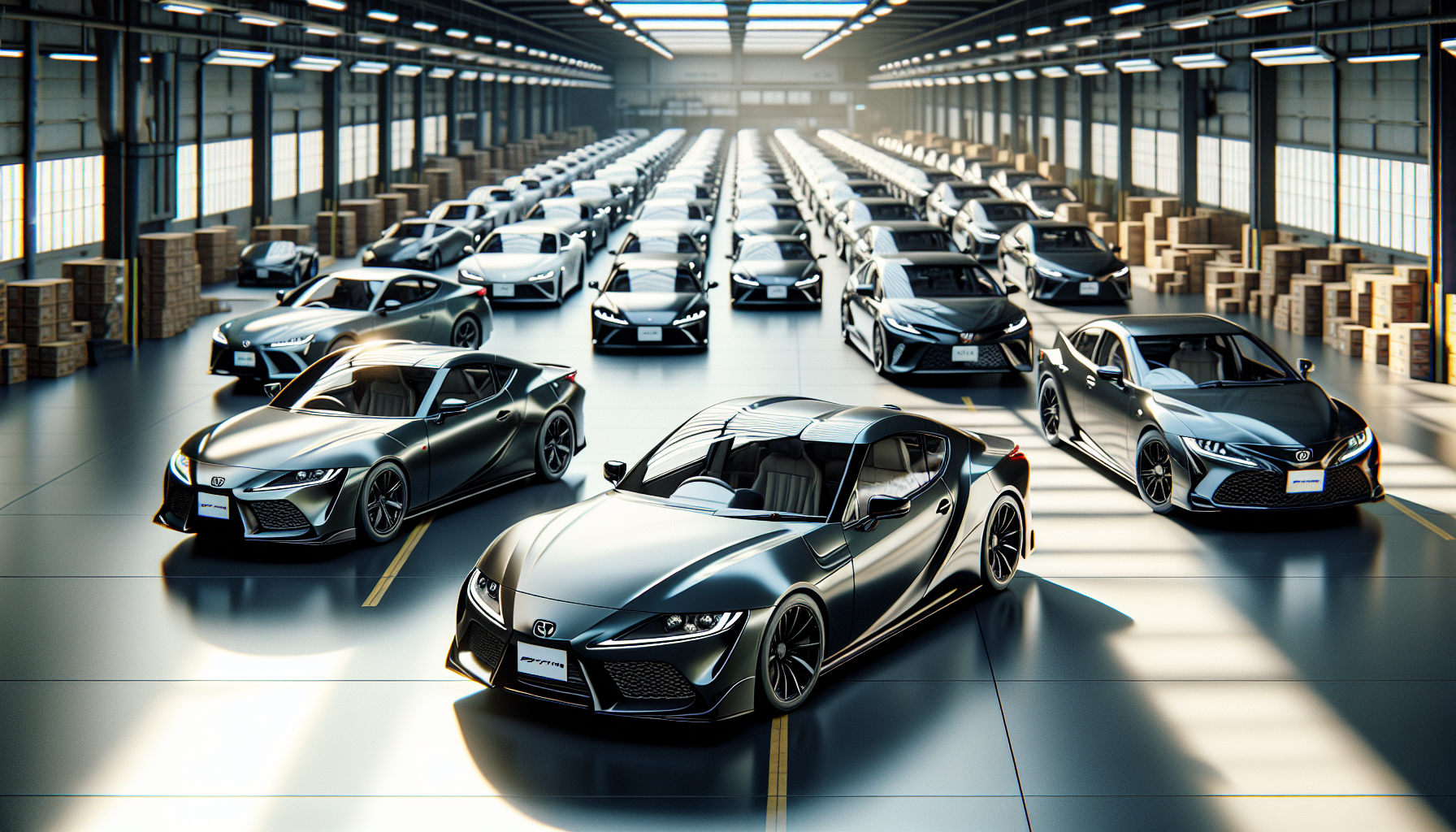
The 12 best Japanese cars to buy in 2025 | GRR
Japan's automotive industry has spent decades building a reputation on two things: mechanical reliability and the kind of driving engagement that European manufacturers charge twice the price to deliver. In 2025, that tradition is arguably stronger than it has ever been. From the humble sports coupe to the track-focused homologation special, Japanese sports cars continue to punch well above their weight class, offering performance, feel, and longevity that routinely embarrass cars costing significantly more.
The market context matters here. Electrification pressure from governments worldwide has forced most automakers to rethink their lineups, and yet Japan's major manufacturers — Toyota, Honda, Mazda, Nissan, Subaru, and Lexus — have doubled down on the internal combustion sports car at exactly the moment many European rivals have backed away from it. Meanwhile, used values for icons like the Nissan GT-R and older Skylines continue to climb, and the newer generation of performance cars is already proving its mettle on both road and track. If you've been sitting on the fence about which Japanese car to buy, 2025 is a genuinely compelling time to make a decision.
This guide walks through 12 of the best Japanese cars available right now, forecasts which models deserve the most attention over the coming months, and explains what the broader trends in this segment mean for buyers. Whether you're after an everyday driver with genuine sporting character or something more focused, the lineup has rarely looked this strong.
Current Trends
Japanese Sports Cars Are Having a Moment
The clearest signal that Japanese sports cars are thriving comes from the sheer variety of new and recently refreshed models hitting showrooms. According to The 12 best Japanese cars to buy in 2025 | GRR, the fourth-generation Mazda MX-5 ND has been so dominant in the small sports car segment that rival manufacturers have largely conceded the space — few cars at that price point offer comparable balance, feedback, and tactility. That dominance speaks to a broader pattern: Japanese manufacturers are increasingly the ones maintaining the philosophy that smaller, lighter, and more connected beats bigger and heavier nearly every time.
Toyota's GR division has become the most watched performance sub-brand in the world over the last few years. The GR86, GR Yaris, and GR Corolla form a trifecta of genuinely driver-focused machinery that came out of a directive from former Toyota president Akio Toyoda to build cars with real emotional character. As r/JDM on Reddit discussions confirm, the GR Yaris in particular resonates with enthusiasts because it was built specifically for the World Rally Championship homologation process — it's a road car that exists because motorsport demanded it.
On the used and new market together, data from iSeeCars.com — which analysed over 12 million vehicles to assess reliability, resale value, and safety — consistently ranks Japanese sports cars near the top across all three criteria. That combination is rare. A car that holds its value, rarely breaks down, and remains genuinely entertaining to drive is exactly what buyers want, and Japan keeps producing them.
Predictions
The Toyota GR86 Becomes the Benchmark Sub-£35,000 Sports Car
The GR86 was already strong, but the 2025 model year updates to steering geometry and suspension tuning have made it noticeably more responsive according to U.S. News, which calls it one of the few budget-friendly sports cars that feels genuinely "put together" at every speed. Expect it to consolidate its position as the default recommendation for anyone wanting rear-wheel-drive engagement without a supercar budget. The rev-happy 2.4-litre flat-four is a large part of that — it rewards commitment in a way turbocharged engines rarely do.
A Turbocharged GR86 Enters Production Before 2026
This is the most discussed upcoming development in the Japanese sports car world. According to TopSpeed, a turbocharged variant of the GR86 has been the subject of internal speculation and engineering development for some time, and could enter production around 2025 or shortly after, given the timeline of the GR Yaris homologation programme. If Toyota follows through, this would give the GR86 the low-end torque it currently lacks without sacrificing what makes the naturally aspirated car special. The platform can clearly handle more power — the question is whether Toyota wants to disrupt its own lineup by giving the GR86 more grunt than the GR Yaris.
Mazda MX-5 Retains Its Crown Despite Electrification Pressure
There has been persistent speculation that the next MX-5 will go hybrid or even full electric. Mazda has resisted that pressure more confidently than most, and the current ND remains the car that other manufacturers have decided not to compete with. Goodwood's Road & Racing assessment is blunt: the MX-5's reign as king of the modern small sports car has been so convincing that rivals have stepped back. Expect the current car to remain on sale through at least 2026, and expect it to keep appreciating in the eyes of buyers who want a pure, unassisted driving experience.
The Nissan GT-R Becomes Officially Collectible
The GT-R has been on extended life support for years — Nissan has kept it in production well past its original intended lifespan, with prices creeping ever higher. RideReverie makes a strong case for why it remains worth considering: motorsport heritage, unconventional all-wheel-drive engineering, genuine supercar performance, and daily usability that most supercars can't match. The NISMO variant is overpriced for what it is, but the standard car increasingly looks like the last of a breed. As production winds down, expect clean examples to start commanding serious collector premiums within 18 months.
Honda Civic Type R Continues to Lead the Front-Wheel-Drive Segment
The FL5 Civic Type R was a genuine surprise when it launched — softer than expected in isolation, but devastatingly fast and confidence-inspiring on roads where previous Type Rs would have shaken your teeth loose. It remains the best hot hatch on sale globally, full stop. Expect Honda to hold this position through 2025 without significant updates, though there are whispers of a hybrid powertrain being developed for the next generation.
Lexus RC F Survives as a Niche Luxury Performance Option
Lexus continues to occupy a space that nobody else in the Japanese sports car world quite fills: genuine V8-powered grand tourer with a soundtrack to match European rivals. As TopSpeed's comparison against BMW M cars demonstrates, the RC F brings carbon fibre hardware, addictive acoustics, and a level of tactile luxury that sits comfortably alongside cars from Munich. With the V8 becoming an increasingly endangered powertrain globally, the RC F's days are numbered — which makes 2025 one of the last opportunities to buy one new.
Subaru WRX Rebuilds Trust After a Difficult Launch
The current WRX arrived with a turbocharged 2.4-litre engine producing less power than many expected, and its CVT-only availability in certain markets frustrated the purists who had kept the nameplate alive for three decades. Subaru appears to be listening. Expect revised tuning and potentially a manual gearbox reintroduction as the brand tries to recover lost ground. The platform is solid — the same turbocharged 1.8- and 2.4-litre Boxer engines power everything from the Crosstrek to the Levorg wagon, with AutoGuide noting that the Levorg's turbocharged unit delivers meaningfully more torque than the naturally aspirated equivalent.
Toyota GR Yaris Demand Outstrips Supply Again
Allocation constraints plagued the GR Yaris at launch, and the situation has never fully normalised. The car's combination of all-wheel drive, a 268bhp 1.6-litre three-cylinder engine, and homologation-pure engineering philosophy means demand consistently exceeds what Toyota's Motomachi plant can produce. Expect waiting lists to persist through 2025, and expect the car's used values to remain strong as a result.
Implications
For buyers, the 2025 Japanese sports car market presents a genuinely unusual set of circumstances. The naturally aspirated sports car — a format many thought was being legislated out of existence — is alive and well, represented by the GR86 and MX-5 in particular. Both cars offer driving experiences that cannot be replicated by turbocharged or electrified alternatives, and both are likely to remain in production for several more years. Buying either car new in 2025 means getting something close to the definitive version of its respective formula.
The more pressing implication concerns the cars at the end of their production runs. The Nissan GT-R and Lexus RC F are both approaching the end of their respective lifespans, and history suggests that last-of-line examples of significant Japanese performance cars become collectible faster than most people expect. The original R34 GT-R is now a seven-figure car in concours condition. The current R35, while a very different proposition, carries enough motorsport credibility and engineering significance to follow a similar trajectory over the long term. Buying one now, while new stock still exists, may look like a shrewd decision by the end of the decade.
For enthusiasts who care primarily about the act of driving — steering feel, balance, and mechanical feedback — the evo magazine assessment captures the philosophy best: the best Japanese sports cars are about back-to-basics sensation and revelling in the process of driving rather than posting impressive numbers. That ethos is harder to find than it used to be across the broader automotive market, which makes the cars that embody it more valuable, not less.
Finally, for buyers considering used options, the data-backed analysis from TrueCar's ranked list reinforces what enthusiasts already know: the GR86 sits near the top for anyone who prioritises steering feedback and balance over straight-line performance. Japanese sports cars, as a category, retain their value better than most, depreciate more predictably, and require less in maintenance costs over a five-year ownership period than their German rivals. The financial case, not just the emotional one, is sound.
FAQ
H3: What is the best Japanese sports car to buy under £35,000 in 2025?
The Toyota GR86 is the most compelling option at this price point. Updated suspension and steering tuning for 2025 make it more responsive than its predecessor, and the naturally aspirated flat-four engine rewards committed driving in a way turbocharged alternatives rarely manage. The Mazda MX-5 is the other serious contender — lighter and more tactile, but with less power and a more open-top focused remit.
H3: Is the Nissan GT-R still worth buying in 2025?
For buyers who want supercar performance with daily usability and genuine motorsport heritage, yes. The GT-R's all-wheel-drive system and twin-turbocharged V6 remain formidable even by 2025 standards. The caveat is that the NISMO version commands a premium that is hard to justify on performance grounds alone. A standard GT-R in good condition represents strong value and, given diminishing new stock, potential long-term appreciation.
H3: Will the Mazda MX-5 go electric?
There is no confirmed electric MX-5 in Mazda's public roadmap for the near term. The company has shown more resistance to electrifying its sports car lineup than most rivals, and the current ND model is widely expected to remain on sale through at least 2026. Any successor is likely to feature mild hybrid assistance at most, at least in the first generation.
H3: How does the Lexus RC F compare to BMW M cars?
Closer than most people expect. The RC F uses a naturally aspirated 5.0-litre V8 that delivers the kind of linear, predictable power delivery that BMW's turbocharged S58 engine doesn't offer in quite the same way. Where the RC F concedes ground is in outright chassis agility — it is heavier than the M4, and the steering is a step behind for pure feedback. But as a fast grand tourer with genuine luxury and a memorable soundtrack, it competes directly with Munich's finest.
H3: What upcoming Japanese sports cars are worth waiting for?
The turbocharged GR86 variant is the most anticipated development, assuming Toyota confirms production. Beyond that, Honda's next Civic Type R with hybrid assistance would be significant. For those with larger budgets, watch what Nissan does with any GT-R successor — the company has been deliberately vague about its plans, but retiring the GT-R without a replacement would be a significant brand statement in the wrong direction.