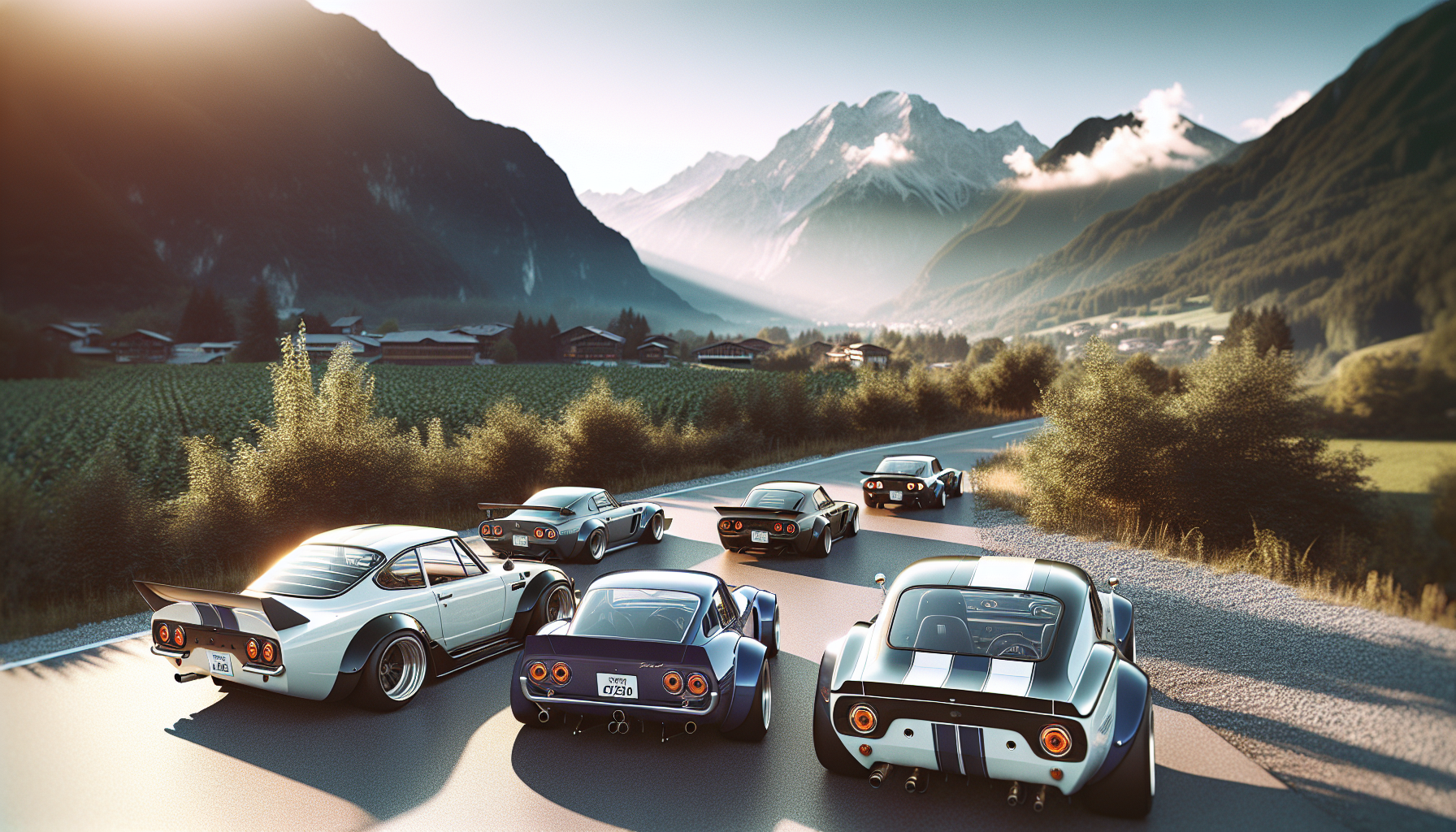
These are 10 of the best Japanese performance cars | Top Gear
Few automotive traditions have produced as consistent a stream of genuinely brilliant performance machines as Japan. From the raw, mechanical honesty of a late-1960s roadster to the electronically sophisticated all-wheel-drive monsters of the 1990s, Japanese engineers have repeatedly redefined what a performance car can be — often at a fraction of the cost of their European rivals. The country that gave the world the Bullet Train also gave it the Skyline GT-R, the NSX, and the Mazda RX-7, machines that didn't just compete with Ferrari and Porsche — they occasionally embarrassed them.
What makes Japanese sports cars so enduringly fascinating isn't just performance for money, though that argument is hard to ignore. It's the philosophy behind the engineering. Japanese manufacturers have long operated with an almost obsessive focus on balance, precision, and driving feedback. The Mazda MX-5 weighs almost nothing and makes modest power, yet it remains one of the most purely enjoyable cars ever built. The Honda S2000 revved to 9,000 rpm and demanded complete driver commitment. These cars weren't built to be comfortable compromises — they were built to be driven.
This analysis draws on the most celebrated examples from across several decades of Japanese performance car history, examining what made each one significant, why certain models aged better than others, and what the broader arc of JDM performance engineering tells us about the industry as a whole. Whether you're a longtime enthusiast or just beginning to explore the world of Japanese sports cars, the ten machines covered here represent the absolute pinnacle of what the country's engineers, designers, and racing programs have produced.
The Founding Fathers: Japanese Sports Cars Before the Bubble Era
Any serious reckoning with Japanese performance history has to start in the late 1960s, when the country's manufacturers were still largely unknown quantities in global motorsport. Two cars from this period deserve particular attention.
The Toyota 2000GT arrived in 1967 looking like something Japan had no business building — a long-bonnet, twin-cam, Yamaha-developed six-cylinder machine with a body so beautiful it was used as a Bond car. It was, by all accounts, one of the most expensive Japanese cars ever produced at the time, and only 351 were made, as noted by Top 10 greatest Japanese sports cars of all time – SentiMETAL Shop. Production rarity aside, the 2000GT established a template: Japan could do sophisticated, lightweight, driver-focused performance with European polish.
Then came the Datsun 240Z in 1970. Where the 2000GT was a precious, low-volume statement, the 240Z was a mass-market revelation — affordable, good-looking, fast enough, and available in numbers that meant ordinary people could actually buy one. As These are 10 of the best Japanese performance cars | Top Gear notes, the series started with the solid-gold 240Z before drifting toward excess through the mid-1980s, with the 300ZX representing something of a creative low point. The lesson was already clear in those early decades: Japanese performance cars were at their best when they stayed honest and didn't try to become something they weren't.
The Honda NSX, arriving in 1990, resolved all of that doubt definitively. Built with input from Ayrton Senna, using an all-aluminium construction that Ferrari hadn't bothered with, and powered by a mid-mounted V6 that revved freely and reliably, the original NSX was a genuine supercar that you could service at a normal dealership. It wasn't just significant in the JDM context — it genuinely changed how European manufacturers thought about driver feedback, ergonomics, and daily usability in a mid-engine car.
The 1990s Explosion: When Japanese Sports Cars Ruled the World
The 1990s were, by most objective measures, the golden era for Japanese performance cars. The combination of Japan's economic bubble, engineering ambitions unchecked by budget constraints, and a fierce domestic competition between manufacturers produced some of the most remarkable performance machines the world had seen.
The Nissan Skyline GT-R (R32 through R34) is the machine most people think of first, and for good reason. The R34 GT-R in particular — with its twin-turbocharged RB26DETT straight-six, ATTESA E-TS all-wheel drive, and HICAS four-wheel steering — was a technical document unlike anything else available at the time. Top 10 Best Japanese Sports Cars on Sale Today points out that even the modern R35 GT-R, now considerably aged, still demonstrates face-bending grip and up to 1.06g average lateral acceleration on the skidpad — a direct legacy of the engineering philosophy established in those 1990s cars.
The Mazda RX-7 FD deserves equal billing. Twin-turbocharged, lightweight, and built around the rotary engine that Mazda has pursued with almost religious devotion, the FD RX-7 produced 255bhp from a 1.3-litre engine that weighed almost nothing and sat perfectly behind the front axle. The chassis balance it achieved was extraordinary. It was also, admittedly, not the most reliable machine ever produced, but its dynamic qualities have never really been surpassed in the lightweight sports car segment.
The Subaru Impreza 22B sits alongside these as a collector's artefact from the peak of the rally-car homologation era. The Best Japanese Sports Cars Ever Made - Road & Track calls the 22B the pinnacle of what Subaru was capable of in the 1990s — turbocharged, all-wheel drive, wider in the arches than anything a sensible person needed, and built in genuinely limited numbers. Only 400 were made for Japan, with a handful exported. It is, today, one of the most aggressively desirable Japanese sports cars on the used market, and prices reflect that accordingly.
The Toyota Supra Mk IV rounds out the 1990s elite. The 2JZ-GTE engine became legendary partly because of what tuners could extract from it — 1,000bhp builds on stock internal components became a genuine cliché — but the standard car was already formidable, with 326bhp in twin-turbo form, a beautifully balanced rear-wheel-drive chassis, and a build quality that made German contemporaries look slightly careless by comparison.
Honda also contributed two more standout machines from this era. The Honda S2000 arrived at the turn of the millennium, with a 2.0-litre VTEC four-cylinder producing 240bhp — giving it one of the highest specific outputs per litre of any naturally aspirated production engine at the time. And the Integra Type R, particularly the DC2 generation produced between 1995 and 2001, is still talked about as one of the purest front-wheel-drive driving experiences ever offered in a road car. The Best Japanese Sports Cars Of All Time, Ranked highlights the third-generation Integra Type R as a landmark for its simple precision and proven reliability across decades of use.
The Modern Interpretation: Japanese Sports Cars in the 21st Century
The 2000s brought a different kind of challenge. Emissions regulations tightened, insurance costs rose, and the Japanese domestic market began contracting. Manufacturers had to be smarter about where they spent development money. The result was a more selective output — fewer cars, but often remarkable ones.
The Lexus LFA is the obvious starting point. Announced and then endlessly delayed before finally reaching production in 2010, the LFA cost the equivalent of around £340,000 and featured a 4.8-litre V10 that revved to 9,000 rpm and made 552bhp. The carbon fibre monocoque was so advanced that Toyota had to build entirely new manufacturing processes to construct it. 10 Best Japanese Performance Cars - MySugarExotics notes that the LFA demonstrates Japan's ability to produce high-end supercars that rival European giants through meticulous engineering and advanced materials. Only 500 were made. Values have risen dramatically since production ended, and the LFA now sits comfortably in the same conversation as the Ferrari Enzo and Porsche Carrera GT as one of the great analogue supercars of its generation.
The Nissan GT-R (R35), launched in 2007, took a completely different approach — raw performance delivered through electronic sophistication rather than mechanical elegance. Its dual-clutch gearbox and all-wheel drive system could put power down with a precision that no human driver could match, and the result was Nürburgring lap times that shamed cars costing three times as much. Critics called it clinical; fans called it devastatingly effective. Both sides were correct.
The Toyota GR86 and its Subaru BRZ sibling represent the most recent attempt to revive the lightweight, naturally aspirated sports car ideal that made the 1990s so special. With a 2.4-litre flat-four in the current generation producing around 234bhp and a kerb weight kept deliberately low, both cars are built to reward driver skill rather than electronic intervention. They don't have the outright pace of a GT-R, but they have something arguably more valuable: an honesty about what driving is for.
10 Japanese Cars That Are More Fun To Drive Than A Porsche 911 makes the case that cars like the Nissan 370Z and its successor, the Nissan Z, continue this tradition of heritage-informed, driver-focused performance — not the fastest cars available at their price point, necessarily, but among the most characterful and satisfying.
The Value Proposition: Affordable Access to Japanese Performance
One of the most remarkable features of the Japanese performance car landscape, particularly from the 1990s, is how much of it is now accessible at surprisingly modest prices. Here are 10 peak nineties and noughties Japanese performance cars for under £20k | Top Gear documents the full range of what's still achievable on a sensible budget — from the Toyota Celica GT-Four (including the rare Carlos Sainz Limited Edition) to the Mitsubishi Lancer Evolution series, cars that were once everyday performance options and are now approaching classic status while still, in many cases, sitting below £20,000 on the used market.
The Mitsubishi Lancer Evolution deserves specific mention here. Across ten generations, Mitsubishi used its World Rally Championship programme to develop a turbocharged, all-wheel-drive saloon that offered genuine rally-car performance in a body that could carry four people and their luggage. The Evolution VI and VII in particular — peak expressions of the formula before weight and regulations began softening the concept — remain extraordinary driver's cars that can be found for a fraction of what a Porsche 911 of the same era costs today.
10 Japanese Cars That Get You Performance And Luxury On The Cheap makes the broader point about the current Toyota GR Supra as well, noting that the base two-litre inline-four model offers genuine performance accessible to a wide audience, while the full six-cylinder version provides a more serious sports car experience for buyers who want the complete package. Japanese manufacturers have consistently delivered more performance per pound than almost any other automotive tradition, and that remains true today.
Why Japanese Sports Cars Continue to Matter
The story of Japanese performance cars is, at its core, a story about engineering culture. Japanese manufacturers approached performance differently from the Europeans — not through heritage and brand prestige, but through obsessive development, genuine innovation, and a willingness to challenge established assumptions. The original NSX asked whether a supercar had to be difficult to live with. The GT-R asked whether driver skill was the limiting factor in ultimate lap times. The MX-5 asked whether a car needed to be powerful to be joyful.
These questions produced answers that changed the entire industry. Ferrari improved its reliability after engineers visited Honda's NSX production line. Porsche reconsidered its approach to driver aids after watching the GT-R take apart their cars at the Nürburgring. The MX-5 reinvented an entire category of affordable roadster that had largely died out.
The cars that endure in the collective memory of Japanese sports cars enthusiasts — the R34 GT-R, the FD RX-7, the NSX, the 22B — did so not just because they were fast, but because they were interesting. They had mechanical personality that rewarded exploration. They told you something about the people who built them, about a national engineering tradition that took its responsibilities seriously and refused to be satisfied with ordinary solutions.
That tradition isn't finished. The GR Yaris — a homologation special with a 1.6-litre three-cylinder producing 261bhp, produced to allow Toyota's rally programme to compete — is exactly the kind of left-field, intensely focused performance exercise that the 1990s produced so reliably. It suggests that at least some manufacturers are still asking the right questions.
Key Takeaways
- The 1990s remain the benchmark era for Japanese performance cars, producing the GT-R, RX-7, Supra, NSX, S2000, and Impreza 22B in the space of a decade — a concentration of talent that is unlikely to be replicated.
- The philosophy matters as much as the specification — Japanese sports cars are at their best when they prioritise driver feedback, balance, and mechanical honesty over outright headline figures.
- The Lexus LFA stands apart as Japan's answer to the European hypercar, using carbon fibre construction and a bespoke V10 to produce one of the great analogue performance cars of any nationality.
- Value is a consistent theme — Japanese sports cars have historically delivered more performance per purchase price than virtually any rival tradition, and significant numbers of 1990s classics remain accessible at sensible used car prices.
- Modern successors are genuine — the GR86, GR Yaris, and Nissan Z demonstrate that the lightweight, driver-focused Japanese sports car philosophy is still alive in current production.
- Rally programmes shaped road cars profoundly — the Subaru Impreza and Mitsubishi Lancer Evolution series translated World Rally Championship technology directly into machines ordinary people could drive on public roads.
- The Honda NSX changed supercar thinking globally — its influence on Ferrari's production methods and Porsche's ergonomic priorities is documented, making it perhaps the most important single Japanese sports car ever built.
FAQ (Frequently Asked Questions)
What makes Japanese sports cars different from European performance cars?
Japanese performance cars have historically prioritised mechanical balance, driver feedback, and engineering precision over brand prestige and heritage storytelling. Where European manufacturers often charge premium prices based on marque identity, Japanese manufacturers have tended to deliver extraordinary performance at competitive prices. The Honda NSX, for example, was more reliable than comparable Italian supercars of its era, cost significantly less, and handled with a precision that reflected extensive input from professional racing drivers including Ayrton Senna. The overall philosophy has been one of solving problems through engineering rather than through marketing.
Which Japanese sports car from the 1990s holds its value best today?
The Nissan Skyline GT-R R34, the Mazda RX-7 FD, and the Subaru Impreza 22B have all appreciated dramatically over the past decade. The 22B in particular, produced in a genuine limited run of approximately 400 units for the Japanese market, commands prices well into six figures at auction. The R34 GT-R has similarly entered collector territory as more examples have been imported to markets like the United States under the 25-year import rule. Among more affordable options, clean examples of the Honda Integra Type R and the early Toyota Supra Mk IV have also climbed steadily.
Is the modern Toyota GR Supra a worthy successor to the Mk IV Supra?
The GR Supra has attracted criticism for its BMW Z4 underpinnings and the absence of a Toyota-developed engine in its six-cylinder form, but the driving experience it delivers is genuinely impressive on its own terms. The chassis is sharp, the balance is well-judged, and Toyota has tuned the car to feel distinctly different from its BMW sibling. Whether it carries the emotional weight of the 2JZ-powered original is a separate question — it almost certainly doesn't — but as a standalone sports car, it is among the most competent performance vehicles currently on sale at its price point.
What is the best entry point for someone new to Japanese sports cars?
The Mazda MX-5 (Miata) is the most commonly recommended starting point, and for good reason. It's reliable, parts are widely available, running costs are manageable, and the driving experience teaches you more about car control than almost any other car at a comparable price. For those who want more power, a well-maintained Honda S2000 or Toyota GT86 (the predecessor to the GR86) offers a step up in intensity while remaining practical for everyday use. The S2000's high-revving engine in particular rewards the driver who learns to use it properly rather than simply relying on outright grunt.
Are Japanese sports cars reliable for daily driving?
Generally, yes — this is one area where Japanese performance cars have historically outperformed European rivals significantly. The Honda NSX was routinely praised for being serviced at standard Honda dealerships without specialist knowledge. The Toyota Supra's 2JZ engine is legendary partly for its durability under both stock and modified conditions. The Mazda MX-5 has one of the strongest reliability records of any roadster ever produced. Rotary-engined cars like the RX-7 require more careful maintenance — specifically, monitoring for apex seal wear and ensuring the engine reaches full operating temperature regularly — but even these can be dependable with proper care. Modern examples like the GR86 and GR Yaris carry Toyota's full warranty and dealer network support.